
Thronefall
Doghowl Games LtdStrategy
4.8602.00 Reviews
- Version
- 2.12.25
- Installs
- 100.00K
- Age Rating
- Everyone 10+
Screenshots
Our Review of Thronefall
 Analysis by Appyee
When I judge a strategy game on a phone, I want to know whether it respects short breaks without feeling too thin for a longer session. Thronefall sits in an appealing middle ground: its kingdom-building and defense give me decisions to make, but the controls are easy to approach. That balance is useful if, like me, you sometimes want a focused game between everyday tasks rather than a sprawling campaign that demands a long stretch of uninterrupted attention.
What to expect from the pace
The rhythm comes from switching between planning and responding. You decide how to build and strengthen your kingdom, then adjust when pressure rises. That gives a session a natural sense of movement without requiring the player to learn a complicated control scheme first. I would not mistake approachable controls for an effortless game, though: the strategic choices still matter, and later challenges ask you to reconsider what worked earlier.
For a quick break, I would treat each attempt as a chance to test one idea rather than expect to master the whole strategy at once. For example, I might focus on whether a different placement improves my defenses, or whether spending resources in another way gives me a better response when enemies arrive. This makes even a session that ends in a setback useful: I can leave with a specific lesson instead of feeling that I simply lost time.
That pacing is not the same as a traditional slow-building strategy game where the main pleasure is managing a large collection of systems over many hours. Nor is it just a reflex challenge. The appeal is the compact loop between choosing a plan and seeing its consequences, so it suits players who like strategy but do not want a dense interface to stand between them and the action.
When the decisions get demanding
The moments that ask the most of me are not necessarily the ones with the most activity on screen; they are the points where I have to choose what to prioritize. Building, upgrading, and defending all compete for attention and resources. If I commit too heavily to one side of that balance, the next challenge can expose the weakness. That makes a useful habit to pause before spending: ask what problem the next investment is meant to solve, rather than upgrading simply because the option is available.
A practical way to approach a difficult stretch is to change one part of a plan at a time. If I alter several choices together, it becomes hard to tell which one helped. Keeping a mental note of what I tried—more attention to defense, a different building position, or a different resource allocation—turns repetition into experimentation. This is a small but valuable distinction: replaying the same approach can feel like a grind, while testing a clear alternative gives the next run a purpose.
The challenge is also why I would not recommend it to someone who wants a game that plays itself in the background. It asks for attention at the moments when threats require a response, and the rising difficulty means that an early comfortable strategy may not remain enough. If you prefer a purely relaxing builder with little pressure, a gentler city-building game may be a better fit; here, the pleasure comes partly from being made to adapt.
Reliability and session habits
I find it most sensible to play when I can give the game a little focus, even if the session itself is brief. Strategy decisions are easier to enjoy when I am not constantly switching away mid-plan. A spare moment at home or a quiet break works better than trying to squeeze a run into a situation where I cannot pay attention. That is not a claim that every session has to be long; it is simply the difference between a short, deliberate attempt and a distracted one.
Because the design encourages trying alternate strategies, a failed attempt does not have to feel like lost progress. I can use the next go to test a more defensive approach or rethink where resources should go. I would avoid changing everything at once, especially after a tough level, because that makes it harder to understand what caused the result. The game rewards reflection more than frantic adjustment.
As with any mobile game, the experience can depend on the device and the conditions in which you play. I would keep the operating-system requirement in mind before downloading, and I would make sure the phone has enough room and battery for a session. I cannot responsibly promise identical speed or stability on every device; if performance matters to you, check compatibility and try a short session on your own phone before settling into a longer one.
Who will enjoy it, and who may not
Doghowl Games Ltd made a strategy game that can work for newcomers who want intuitive controls, while still giving experienced players decisions to chew on. Its average rating is 4.9 from around 15 thousand ratings, and it has over 100 thousand installs. Those figures suggest broad interest, but I would use them as context rather than a guarantee: what matters is whether you enjoy the mix of kingdom planning and defense.
I would point a friend toward it if they enjoy making a plan, watching it meet resistance, and adjusting rather than starting over with a completely different genre. It is also a good candidate for someone who likes replaying levels to see whether a more thoughtful setup changes the outcome. I would steer away a player who dislikes difficulty increasing over time, wants a passive game, or expects a huge management sandbox with extensive systems to oversee.
Compared with the usual alternatives in mobile strategy, it feels more focused than a broad empire-management game and more deliberate than a game built chiefly around quick reactions. That focus is a strength when I want clear decisions without a pile of menus, but it also means players seeking extensive long-term administration may prefer a larger strategy title. The better choice depends on whether you want a compact tactical challenge or a sprawling world to manage.
A First Look at Thronefall
So, here’s the deal: Thronefall is a strategy-based game available on both Android and iOS, and it’s all about building your kingdom from scratch while defending it from various foes. It sounds simple, but trust me, it’s got layers that keep you hooked.
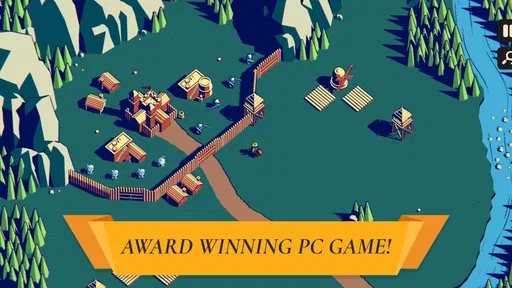
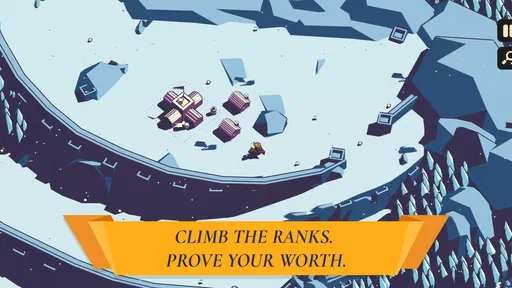
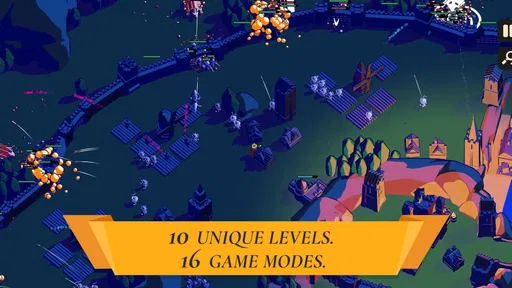
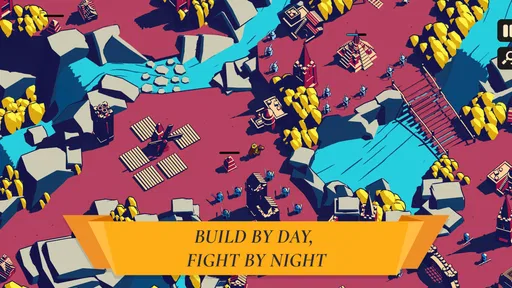
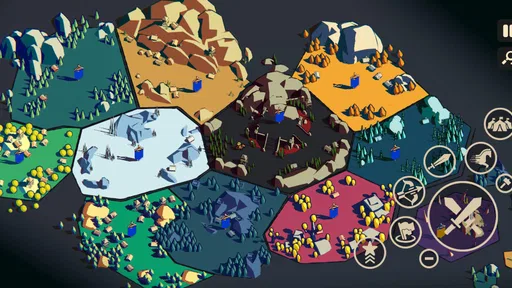
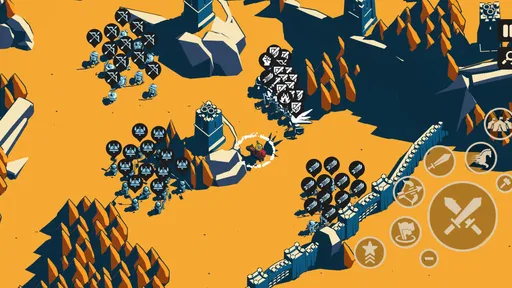
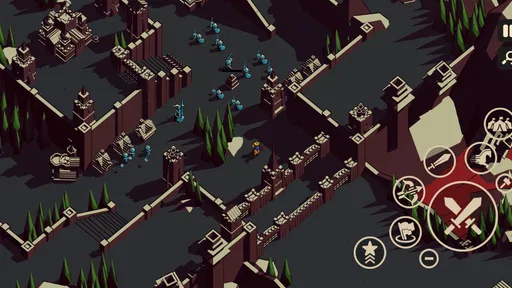
What initially drew me in was the eye-catching graphics. The game designers have done an amazing job with the visual elements. The colors are vibrant, and every character is meticulously designed, making the game feel like a living, breathing world. It’s the kind of game where you pause just to admire the scenery.
Gameplay That Keeps You Hooked
Now, let’s talk gameplay. Right off the bat, you’re tasked with constructing your kingdom. It’s not just about slapping some buildings down and calling it a day. You’ve got to think strategically about where to place your structures to maximize defense and resource generation. This aspect of the game is super engaging because it requires careful planning.
The game does a stellar job of gradually increasing difficulty. At first, I thought, “Hey, I’ve got this!” But as you progress, the challenges ramp up, and you’re forced to think on your feet. Each level introduces new enemies, each with unique abilities, pushing you to tweak your strategies continually.
Strategic Depth
What I love most is how Thronefall balances simplicity with depth. The controls are intuitive, which is great for someone like me who doesn’t want to spend ages figuring out the mechanics. Yet, the game offers enough depth to keep even the most seasoned strategy game players engaged.
The resource management aspect is another layer that adds to the game’s depth. You need to gather resources to build and upgrade your structures, and deciding how to allocate these resources becomes crucial. It’s all about finding that sweet spot between offense and defense.
Sound and Music
Let’s not forget about the sound design. The game’s soundtrack is an absolute treat. It’s epic and immersive, perfectly complementing the game’s medieval theme. I often found myself getting lost in the music, which added a whole new layer to the experience.
The sound effects are spot-on too. Each action, from building structures to engaging in battle, is accompanied by satisfying sound effects that enhance the overall immersion.
Replayability and Updates
One of the things that keep me coming back is the game’s replayability. Each time you play, you can try different strategies, making each session feel fresh. Plus, the developers are pretty active, frequently rolling out updates and new content, which keeps things exciting.
If you’re someone who enjoys diving deep into a game and exploring all its nuances, Thronefall offers plenty of opportunities for experimentation and discovery.
Final Thoughts
All in all, my experience with Thronefall has been nothing short of fantastic. It’s got everything I want in a mobile game: strategic depth, engaging gameplay, and stunning visuals. Whether you’re a strategy game veteran or someone looking to dip their toes into the genre, this game is definitely worth checking out.
So, if you’re ready to build your kingdom and defend it with all your might, grab your phone, download the game, and dive into the world of Thronefall. You won’t be disappointed!
Before you decide
The price is $10.99, so I would treat this as a paid game rather than a casual free download. That changes the decision: it makes sense if you already know you enjoy strategy games built around planning and defense, but less so if you only want to sample the genre for a few minutes. Its Everyone 10+ content rating is another useful guide for families choosing a game, though I would still consider whether the rising challenge and combat theme suit the individual player.
The game was released on June 11, 2025, and its current version is 2.12.23. It requires iOS 11 or later, so I would check the device’s software before purchasing rather than discover a compatibility issue afterward. If you are choosing between playing on a phone and another device, the main practical question is whether you are comfortable making placement and resource decisions on a smaller screen; players who prefer a larger view may find a bigger display more comfortable.
One everyday scenario where I can see it fitting is a quiet coffee break: I start with one clear strategy question, play with enough attention to see how the defense holds up, and stop once I have learned whether the change helped. That is more satisfying than opening it while distracted and making purchases or placement decisions without a plan. For a longer session, I would use the same approach across several attempts, changing one priority at a time so the replayability feels purposeful instead of repetitive.
My performance verdict
On the performance side, I would set expectations around a focused strategy experience, not assume that a visually appealing game automatically runs identically on every phone. Device age, available resources, and software compatibility can all affect how comfortable a session feels. Since I cannot infer universal speed or stability from the game’s design alone, the sensible move is to confirm that your device meets the operating-system requirement and assess it in a brief first session. If it feels comfortable there, the short decision loop should make it easy to judge whether it suits your routine.
For me, the strongest reason to choose this is that it makes planning feel approachable without removing the need to think. The trade-off is that the player has to engage with rising pressure and resource choices; it is not my pick for passive play or a deep, sprawling management experience. If that focused balance sounds appealing, the combination of kingdom construction, defense, and replayable strategy gives you a clear reason to spend time with it.
Verdict
Strengths of Thronefall
- Engaging strategic gameplay.
- Intuitive controls and interface.
- Visually appealing graphics.
- Regular updates and new content.
- Offline play available.
Limitations of Thronefall
- Limited multiplayer options.
- Some in-app purchases necessary.
- Occasional performance lags.
- Requires frequent strategy adjustments.
- Tutorial can be too brief.
Similar Picks in This Category
View All
Clash of Clans
Supercell4.5

Plants vs. Zombies™
ELECTRONIC ARTS3.7

Lords Mobile: Kingdom Wars
IGG.COM4.5

Clash Royale
Supercell4.4

State.io — Conquer the World
CASUAL AZUR GAMES4.1

Car Driving School : Car Games
Spark Game Studios3.9
Frequently Asked Questions
What is the main objective of Thronefall?
Thronefall is a strategic city-building and defense game where the primary objective is to build and manage a medieval kingdom. Players must strategically allocate resources, construct buildings, and defend their realm from invading forces. The game challenges players to balance expansion with defense to ensure the prosperity and safety of their kingdom.
How does the gameplay of Thronefall enhance the user experience?
Thronefall offers a unique blend of strategy and action, providing an immersive experience for players. The intuitive controls and detailed graphics enhance gameplay, allowing users to engage deeply with the building and defense mechanics. The progression system ensures that players are continually challenged, providing a satisfying and dynamic gaming experience.
What are the system requirements for Thronefall on mobile devices?
Thronefall is designed to be accessible on both Android and iOS devices. For Android, it requires version 5.0 or higher, while iOS users need version 10.0 or later. The game is optimized to run smoothly on most modern smartphones and tablets, but having a device with at least 2GB of RAM is recommended for optimal performance.
Are there any in-app purchases in Thronefall?
Yes, Thronefall includes in-app purchases that allow players to enhance their gameplay experience. These purchases can range from additional resources and special items to exclusive content. However, the game is designed to be fully enjoyable without spending money, and all content can be accessed through regular gameplay, providing a balanced experience for all players.
Is Thronefall suitable for all age groups?
Thronefall is rated for players aged 9 and up, due to its mild fantasy violence and strategic gameplay elements. The game encourages critical thinking and planning, making it suitable for both younger and older audiences who enjoy strategic challenges. Parents can feel comfortable knowing that the game contains no inappropriate content.
Play our best games!


